
Best Time to Visit Nicaragua: Month-by-Month Guide

Best Time to Visit Nicaragua: Weather, Surf and Crowds by Month
By Joel Stott-Jess
The best time to visit Nicaragua for reliable sunshine and an easy first trip is generally from late November through February. On the southern Pacific coast around San Juan del Sur, Tola and Popoyo, this period brings dry-season weather without the most intense heat of late March and April.
That is the short answer. The better answer depends on what you want from the trip. Serious surfers usually prefer May through September, travelers who want green hills and fewer visitors may love May, June or late November, and anyone who dislikes crowds should plan around Christmas, New Year and Semana Santa.
This guide focuses on Nicaragua’s southern Pacific coast, where I live and work most of the year. Conditions on the Caribbean coast and in the northern highlands follow different patterns, so do not use a San Juan del Sur forecast as a stand-in for the whole country.
The quick answer: choose your dates by the trip you want
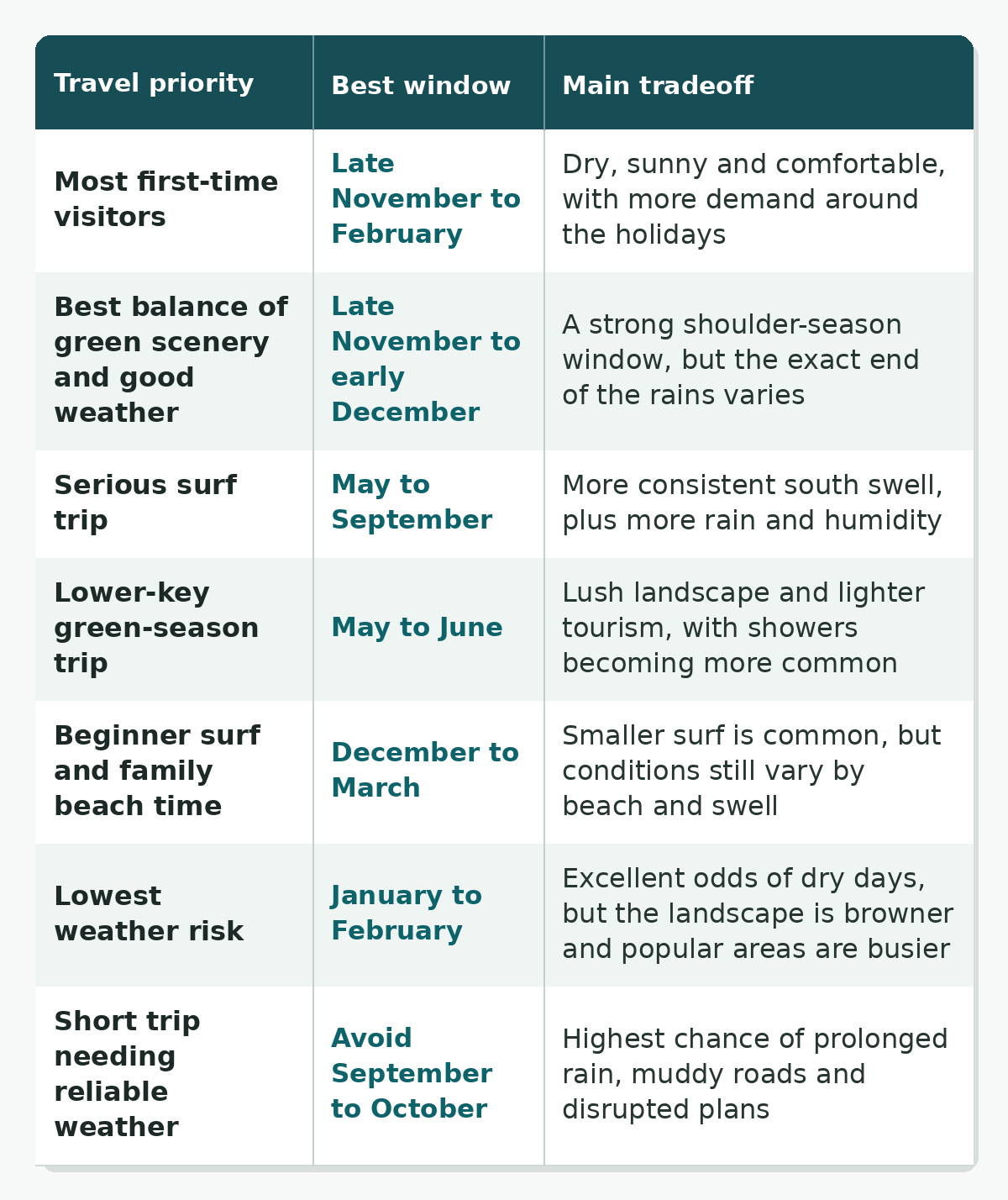
Local note: Weather is never guaranteed, especially near the start and end of the rainy season. Use these windows to improve your odds, not as a promise about a particular week.
How Nicaragua’s seasons work on the southern Pacific coast
Nicaragua’s Pacific side has two broad seasons: a dry season and a rainy season, more commonly called the green season. The transition is gradual, and the exact timing changes from year to year.
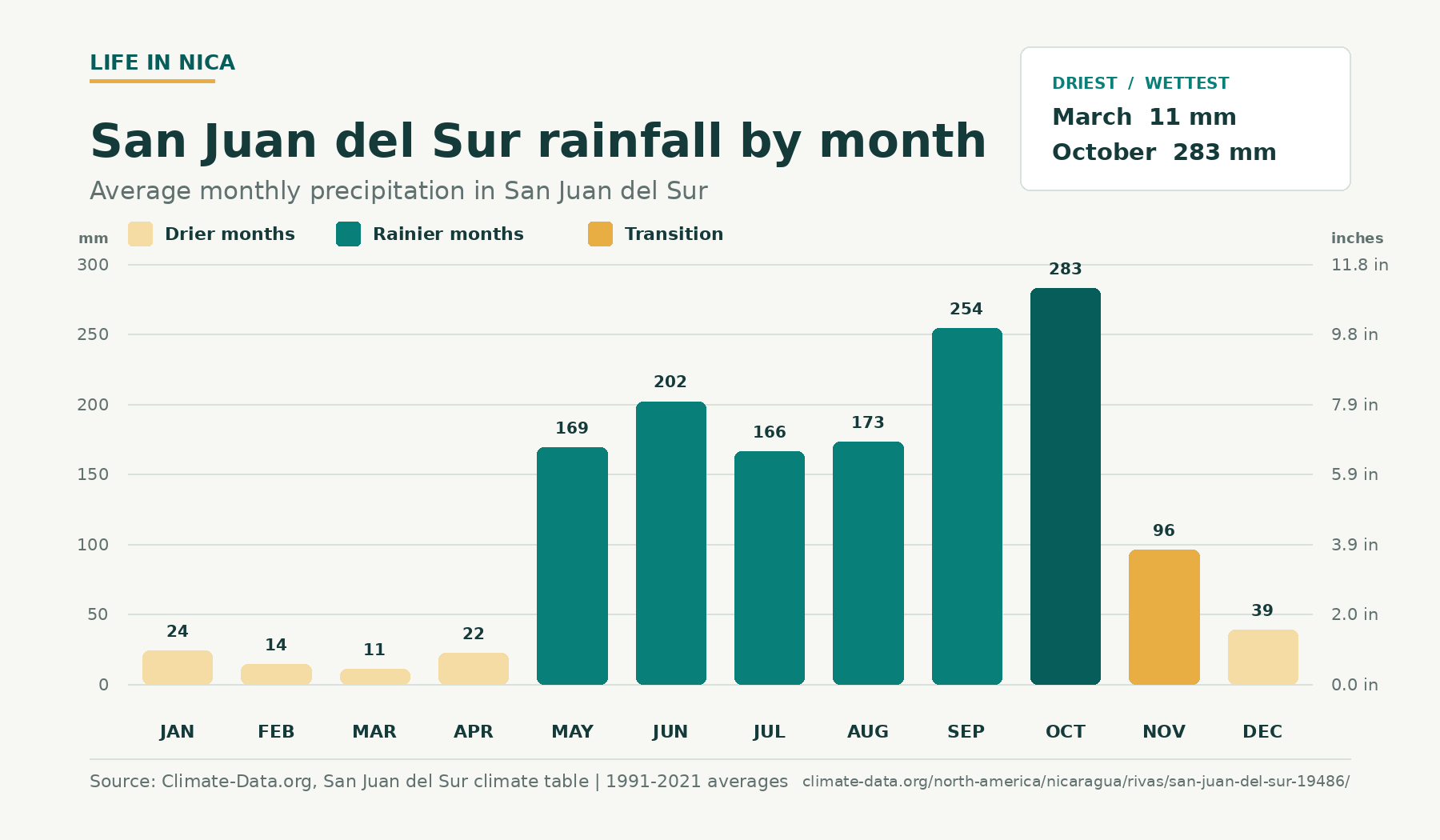
The INETER Climate Atlas shows the strong seasonal rainfall pattern across the country. For practical trip planning around San Juan del Sur and Popoyo, think of December through April as the dry core, May through October as the green core, and November as a transition month.
Dry season: late November through April
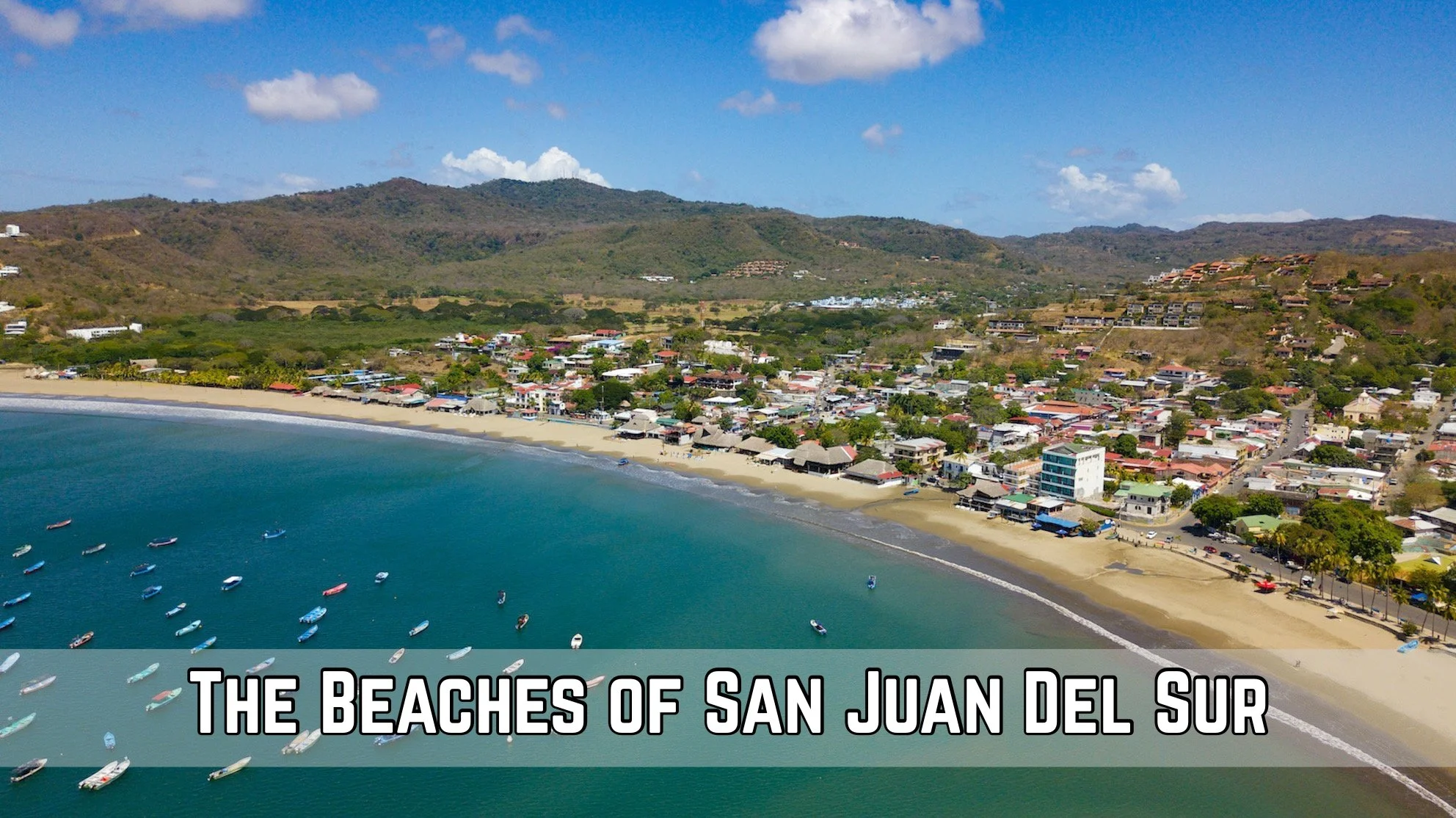
Dry season is the simplest choice for beaches, road trips, volcano hikes and a first visit. Skies are usually clearer, unpaved roads are easier, and you can plan outdoor days with less concern about rain. The tradeoffs are higher demand around major holidays, dustier roads, stronger winds at times and an increasingly dry landscape as the season progresses.
January and February are my default recommendation for a straightforward coastal vacation. March and April remain dry, but the heat builds and Semana Santa can transform the coast for a week. If you are sensitive to heat or want a quieter town, late dry season may not be your best fit.
Green season: May through October
Green season does not automatically mean rain all day. Many days still include long bright periods, with showers arriving later in the day or overnight. But that familiar pattern is not a guarantee. A slow-moving weather system can produce several wet days in a row, and this matters more on a seven-day vacation than it does when you live here year-round.
May and June can be excellent. The hills recover quickly, the coast feels calmer, and the first meaningful south swells arrive. July and early August sometimes receive a temporary reduction in rainfall known as the canícula. INETER describes it as a relative mid-rainy-season decrease rather than a second guaranteed dry season, and its timing and strength vary by year.
September and October require more flexibility. INETER identifies September through November as the second rainy period and notes flood exposure along both coasts. October is typically the wettest month around San Juan del Sur in long-term climate summaries. If roads, boat trips, daily surf or a packed itinerary are essential, I would not choose October for a short first visit.
Get the best of Nicaragua in your inbox
Monthly insight on living, real estate, investing and life in Nicaragua, with no spam and no sharing of your data. Join the Life in Nica List.
Nicaragua month by month
January
One of the safest choices for dry weather. Expect sunny beach days, breezy conditions and a lively coast. Book ahead if your dates touch the New Year rush.
February
My strongest all-around recommendation. It is normally dry and sunny, and it avoids the major Christmas and Easter travel crushes. Strong offshore wind can make exposed beaches feel cooler and may affect surf quality.
March
Still very dry, with hotter afternoons and a browner landscape. Surf begins to pick up on some south-facing beaches. Check the Semana Santa calendar because Easter moves from year to year.
April
Usually the hottest-feeling part of dry season. Early south swells can make April attractive to surfers, but Easter week can mean packed beaches, limited rooms, higher rates and heavy traffic. Outside Semana Santa, it can be a good transition-month gamble.
May
A favorite for travelers who do not need perfectly dry weather. The first rains cut the dust, the landscape turns green and surf becomes more consistent. Expect heat, humidity and occasional heavy showers.
June
Lush, warm and often quieter. Many days have usable mornings and wet afternoons or nights, but multi-day rain is possible. This is a good fit for a flexible surf or slow-travel itinerary.
July
A mixed month with good surf potential and a possible canícula-related drier stretch. Do not book on the assumption that the mid-season break will arrive on fixed dates.
August
Warm water, green scenery and active surf season. Rain risk rises as the month progresses, while local holiday periods and weekends can still bring bursts of domestic tourism.
September
One of the wetter months. Experienced surfers may still find excellent windows, but travelers with a tight schedule should build in backup plans and ask about road access before booking a remote property.
October
The highest-risk month for a short coastal vacation. There can be beautiful, quiet stretches, but prolonged rain, rough access roads and weather-dependent cancellations are more likely. Choose it only if flexibility and solitude matter more than certainty.
November
A true transition month. Early November can still feel like rainy season; late November can be superb, with green hills and much drier weather. It is one of the best shoulder-season bets, but I would leave some flexibility if booking far in advance.
December
Early December offers a useful mix of green scenery and improving weather. From mid-December through New Year, demand and traffic rise sharply, so accommodation and transportation should be booked early.
Want current local updates between trips? Follow Life in Nica on Facebook for new articles, property updates and practical notes from the southern Pacific coast.
When is the best time to surf in Nicaragua?
For experienced surfers chasing consistent south swell, May through September is the best general window on the southern Pacific coast. April and October can also produce excellent days, but they are transition months with more uncertainty at opposite ends of the season.
The reason is a combination of swell exposure and local wind. Storms in the Southern Hemisphere send long-period swell toward Nicaragua’s Pacific coast during the northern spring and summer. The low terrain around Lake Nicaragua also forms part of the Papagayo gap-wind system, allowing easterly winds to funnel toward the Pacific. Research in the Journal of Geophysical Research describes how trade-wind bursts pass through this lowland gap and fan over the ocean.
For the science and local break detail, see the Papagayo gap-wind research and this Popoyo surf-season guide.

That does not mean every beach is offshore all day or that every May-to-September week is large and clean. Tide, swell direction, local wind and the shape of each break matter. Popoyo Main Break can become serious during peak swell season, while protected sand-bottom beaches are more suitable for beginners. A good local surf guide should match the beach and session to your actual ability.
For a broad introduction to the local coastline, the Life in Nica guide to the beaches around San Juan del Sur explains the character of the main bays and surf areas. If you are curious about why reliable waves also influence property demand, read Surfonomics: Property Markets and Waves.
When should you avoid the coast if you dislike crowds?
The two periods I would plan around are the Christmas and New Year holidays, and Semana Santa. Nicaragua’s beaches are major domestic holiday destinations, not just international tourist spots. During those weeks, accommodation tightens, popular beaches become busy, restaurant reservations matter more and the Peñas Blancas border can slow down.

Semana Santa deserves special attention because its dates change every year. INTUR’s 2026 tourism report listed Rivas as the country’s most visited department during the holiday period. San Juan del Sur and the wider Rivas coast can feel completely different during Easter week than they do the week before or after.
Plan the route as carefully as the dates. The Life in Nica guide to flying into Managua or Liberia covers airport choices and the Peñas Blancas border. The official INTUR Semana Santa tourism report provides useful context on the scale of domestic travel.
What weather should you expect in San Juan del Sur and Popoyo?
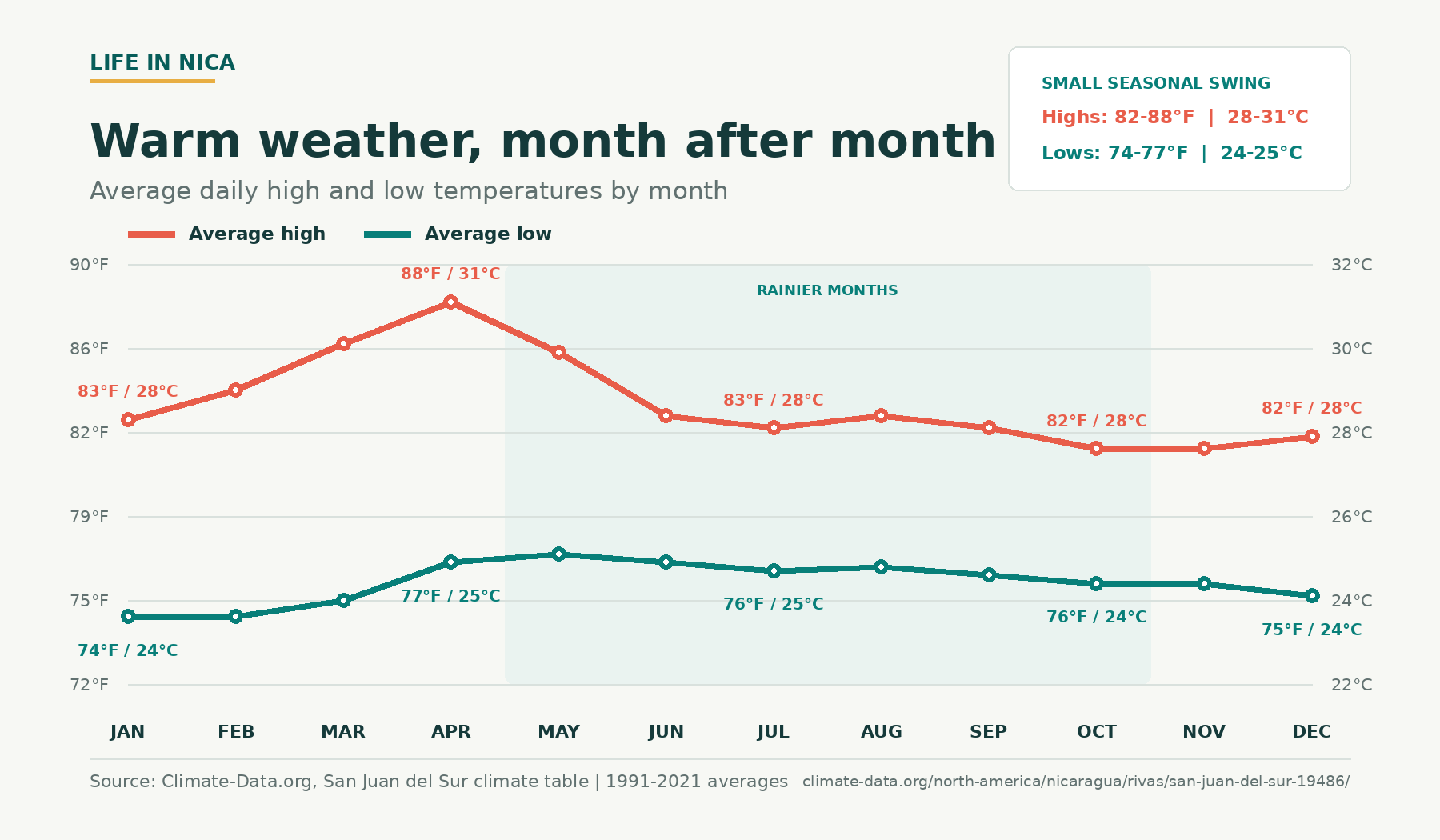
Expect warm tropical weather all year. Long-term summaries for San Juan del Sur place average daytime maximums in a relatively narrow band, roughly the mid-80s to upper-80s Fahrenheit, or about 29 to 32°C, with April usually hotter and December slightly cooler. Nighttime temperatures are commonly in the mid-to-upper 70s Fahrenheit, or the mid-20s Celsius.
Rain changes far more than temperature. March is among the driest months, while October is the wettest in common long-term summaries. Sea temperatures remain warm enough for swimming year-round. Strong dry-season winds can cool the nearshore water at times and make an early session feel less tropical than the air temperature suggests.
San Juan del Sur, Popoyo and inland Rivas can also feel different on the same day. Hills, bays, wind exposure and distance from Lake Nicaragua all matter. Check a short-range forecast for your exact beach a few days before arrival, then keep a little room in the itinerary.
Using a vacation as a Nicaragua property-scouting trip

If you are considering a home, rental property or longer move, the best scouting season depends on what you need to learn. Dry season makes it easier to cover more ground and compare neighborhoods. Green season reveals drainage, road access, roof leaks, humidity, vegetation growth and how a property handles heavier weather. Those are useful things to see before you buy.
A practical compromise is a late-November trip or two visits in different seasons. Spend enough time in San Juan del Sur and the Tola/Popoyo area to understand how services, roads, restaurants and community life differ. Beach access that looks simple on a map can feel very different in practice.
You can browse current Nicaragua real estate listings before the trip and use the Life in Nica property-buying guide to prepare better questions. If you arrange viewings, leave open time between appointments. Coastal drive times and road conditions can change more than a map suggests.
Frequently asked questions
What is the single best month to visit Nicaragua?
February is the safest all-around answer for the southern Pacific coast. It is normally dry, sunny and outside the biggest Christmas and Easter travel weeks. Late November is the better choice if you want greener scenery and accept a little more weather risk.
Is rainy season a bad time to visit Nicaragua?
No. May through August can be excellent for surf, green scenery and a quieter coast. The mistake is assuming rain will always be a short evening shower. Build flexibility into the trip, especially from September onward.
Does it rain all day in Nicaragua’s rainy season?
Often it does not, but sometimes it can. Many green-season days include sun, clouds and one or more showers. Regional weather systems can also bring sustained rain, so a short trip has more weather risk than a long stay.
When is Nicaragua hottest?
March and April usually feel hottest on the southern Pacific coast, especially after months without rain. May can also feel intense because humidity rises as the wet season begins.
When is Nicaragua least crowded?
May, June, September and October are generally quieter on the coast than the core dry-season months. For a better balance of calmer beaches and manageable weather risk, look at May, June or late November rather than October.
Should I visit San Juan del Sur or Popoyo?
Choose San Juan del Sur for a walkable town, more restaurants, nightlife and easy access to several beaches. Choose Popoyo and the Tola coast for a quieter, more spread-out surf trip. Many visitors combine them, but allow realistic drive time and confirm road conditions during green season.
So, what is the best time to visit Nicaragua?
For most visitors to the southern Pacific coast, aim for late November through February. Choose January or February for the most reliable dry weather, late November for green scenery with improving conditions, and May through September if surf is the main reason for the trip.
Avoid Semana Santa if crowds and high demand will frustrate you. Think carefully before choosing September or October for a short, tightly scheduled vacation. Nicaragua is worth visiting in more than one season, but the right month depends on the tradeoff you are willing to make between sunshine, surf, scenery, price and flexibility.
If part of your trip is about deciding whether life or property ownership here could suit you, use the visit to test the ordinary details as well as the beaches. A week that answers your real questions is more valuable than a week that only delivers perfect weather.

Joel Stott-Jess
Cell / WhatsApp: +505 8176 8624
US Number 1 786 753 8743
Joel Stott-Jess is a New York Times featured agent / broker in San Juan Del Sur, Nicaragua.
Originally from Alberta, Canada he has been doing business in Nicaragua since 2014.











Buying Property in Nicaragua - 14 Things to Know. The most detailed guide to the process. Updated in September 2026